Monday, January 6, 2014

50 Ways to Prepare Your Child for Potty Training


Experts will tell you that potty readiness will happen on its own, in time. To some degree this is true. But as I discussed in my last post, nature and nurture are a paradox; one gives rise to the other. I’m a firm believer that if you help your child become familiar with the ins and outs of pees, poops, and potties before you ditch the diapers, he or she will have an easier transition once he becomes physically and cognitively capable.

This list contains ideas for ways to help familiarize your child with bathroom practices. Some are meant to make potty use fun, and some are meant to demystify the process. When used correctly, they may help him reach a ready stage when he is developmentally able instead of being put off by psychological obstacles.  This isn’t meant to be a comprehensive how-to, but a list of suggestions to put toward a fun and individualized training method. You should select only the items on this list that you have reason to believe your child will be receptive to. It is important to use a gentle and casual approach, and be prepared to abandon any activity that your child resists.   
 

1. Invest in a potty training Doll. Potty Scotty, Emma, Fisher Price Ready for Potty Dora, or any other sort of Drink-and-wet doll is an ideal teaching aid for the child who already loves dolls. Be sure to give a demonstration and “reward” the doll with invisible treats.

2. Build a Lego potty. Attach a small brown piece to a Lego man’s bottom. Explain to your child that it’s a poop that needs to go into the potty because it’s not part of his body. 


3. Allow her to rip small pieces of toilet paper up and place the pieces in the toilet bowl. Flush and watch how they go down.

4. For the child who likes sports, play a game of Potty Toss. Fill yellow or brown socks with rice to make bean bags, and have your child toss them into a clean, dry potty bowl. Tell her the socks are like poops and pees and they need to get right in the bowl.

5. If your child is interested in buildings or factories, make a stop outside of your local waste processing plant. Explain to your child that this is where the toilet pipes lead, and inside the building the poop and pee gets cleaned up.

6. Visit a farm, pet store, or zoo and ask an employee to show you the creatures who “go” in a special place. Read “Everyone Poops” by Taro Gomi and talk about how people and animals each have their own special place, and the boy’s (or girl’s) special place is the potty or toilet.


7. Fill squirt bottles with yellow water and allow your child to squirt them into the toilet.

Potty Humor
8. Be accepting of potty humor. Humor is what happens when a person gains such mastery of a subject he or she begins to play around with it. Potty humor is a sign of understanding, and laughter can take the scariness out of the experience. You can always teach your child later on where and when the use of potty humor is appropriate.

9. Use a dry erase board to draw pictures of pees and poops in a toilet. Use the eraser to “flush” them away.

10. Use brown Play Dough to teach about poops. Have a doll or puppet “deposit” them in a dough potty and praise the toy for doing a good job.
good job! (but gross)
11. Put some fun books on the back of the toilet or in a magazine rack. Add a small stool, and allow your child to sit on the toilet as a reading area, even if fully clothed. 

12. Play “Pin the Pee Pee in the Potty” with a picture of a toilet bowl and some brown and yellow dot stickers.

13. Use a stool and step ladder and allow your child to play with water and soap in the bathroom sink. Hand washing can be an effective reward in itself for using the potty.

14. Purchase some potty training books that appeal to your child’s interests. Look for gender appropriateness, books with your child’s favourite television characters, and teaching principles that are similar to the ones you will be using.

15. With your child in your lap, watch You Tube videos about potty training and talk about them, or learn the potty songs together and sing them.

16. Take some time to teach your child self-help skills like unbuttoning and removing pants. Praise her for her autonomy.

17. Let him see his same-gendered adult family members using the toilet. Have those people provide a commentary.

18. Purposefully teach your child the words your family uses for the toilet, bodily functions, and body parts. Be consistent in using the terms you have chosen.

19. Teach your child how to sign “pee” “poop” and “potty.”  You can use American Sign Language or you can make up your own family sign.
ASL "Poop"

20. For the kinesthetic learner, teach your child a simple potty dance. It can be a victory dance for potty success, or a dance to indicate that it’s time to go.

21. Allow your child spend time with potty trained children. Talk about how big kids use the potty, but don’t make comparisons or invite a contest.

22. Obtain a toy potty and pretend your child’s favourite toys are using it.

23. Fill a train or dump truck with brown pompoms, and have your child transport and deposit the poopies to the “potty depot.”  When your child eventually uses the toilet, you can “vroom” the potty toward the big toilet and make train or truck sound effects as you empty it. For extra effect, add truck stickers to the side of the potty.

24. Play a game where participants try to walk with a ball wedged between their knees or thighs and drop it into a toy potty.

25. Show your child a diagram or a model of the human body and talk about how food passes through the body.

26. Let your child have plenty of choices each day and trust him with fun responsibilities (not related to potty training.) A child who feels he has some degree of control over his life will be less likely to over-exercise control over his bladder and bowels.

27. If your child has a dollhouse with a bathroom, play dolls with her and occasionally have your doll drop whatever she is doing and zoom up the stairs to the bathroom to go pee pee.

28. Don’t forget the boys! If he doesn’t play with a dollhouse, give Superman a can for his fortress of solitude.

29. Make a snow potty for a snowman. Put snowballs in it, or colour the snow with a squeeze bottle containing yellow water.

30. When changing your child’s diaper, talk about how soon she will be able to use the potty and she won’t have to be stuck on the boring old change table anymore.

31. Allow your child to see you unload some poop from the diaper into the toilet. Cheer, “that’s where poopy goes. Hooray!”

32. Use a hand puppet with a hole in its mouth to demonstrate how something that gets eaten comes out the hole in the bottom.

33. Watch DVD’s about potty training with your child. Often they are available from the public library.

34. Print out a digital photo of your toilet bowl and have your child “add” to it with yellow and brown markers, paints, or stickers. Talk about getting poops and pees in the right place.

35. Decorate the potty together with stickers of your child’s favourite things.

36. Play pretend or dress up with your child and incorporate a clean potty chair. Pretend it is a princess throne or a robot charger. This will help your child become comfortable sitting on it.

37. If you are creative, make up a simple song about going to the potty and sing it every time YOU use the potty. A perceptive child will link bathroom use with singing and it will become a positive association.

38. Before you make a potty reward chart for your child, make one for yourself. Praise yourself out loud whenever you go to the potty and put a sticker on the chart.  Your child might want to get in on the game without being prompted.

39. Build a ball run out of plumbing supplies. Show your child the pipes in your house if they are visible and tell her that the toilet works the same way.

40. Visit the bathroom section of a hardware store and let your child explore the display toilets, (being careful that he doesn’t try to use them!) Children are inherently more interested in things when they appear in multiples, toilets included.


41. Teach your child to wipe up spills, and once in a while have her use toilet paper.  This will teach the general concept of wiping.

42. Teach your child about his own anatomy and how it works. You can use proper terms like “urethra” and “anus”, or you can simply say bum bum and pee pee or whatever you are comfortable using. Either way, it will help your child communicate any difficulties he may encounter.

43. Give your child baby dolls with removable diapers. Talk about how little babies like to go in their diapers because they are too little for the potty.

44. Decorate the bathroom together with removable wall decals or other crafts. This will make the bathroom into a fun, familiar place where your child feels welcome.

45. If your child suffers from chronic diarrhea or constipation, keep a journal of her food intake and make an appointment with a health professional.  Potty training is much easier when children are having regular bowel movements.

46. Just for fun, have your child put a sticker on a chart when your cat uses the litter box. Have a picture of a litter box on the cat’s chart and a picture of a potty on your child’s chart. Talk about how everyone gets a treat when they learn to go pee and poop in their own correct place.

47. Use paint on a plastic doll or action figure to demonstrate wiping.  Let your child practice wiping them clean. Show him how to look for the piece of toilet paper that comes up white and signals the end of the wiping process.

48. If approve of such things, try a potty training video game or an app for your mobile device.

49. Play a game with your child that involves racing to the bathroom.  You can pretend to hop, fly or swim. Or you can tape paper footprints to the floor that your child needs to step on. Have a sort of drill where you holler “pee pee!” and the race is on.

50.  Make up a personalized bedtime story about a little boy or girl who goes on an adventure to potty land.


Is “He’ll do it when he’s ready” the worst clichĂ© in potty training? (Why swimming salamanders should be left out of the bathroom)


Little Johnny’s mother is exasperated. She has tried everything to get her four year old to use the potty: rewarding, bribing, pleading, cajoling, drawing little targets on the bottom of the bowl, but the boy has made no progress. The first time Johnny’s parents sat him on the potty, he was 18 months old. When that failed, a well-meaning friend offered the advice, “Wait until he’s ready! You’ll mess him up, and he’ll never learn.” Now almost three years later, Johnny’s mom is wondering if she did this to him by not waiting long enough before that first attempt. Riddled with guilt, she turns to her peers for advice on how to train him before he embarrasses himself in kindergarten. “Don’t worry about it,” her friends all chime in once again. “He’ll do it when he’s ready.” Some even say “Stop trying so hard, they’ll all do it on their own eventually.”  And someone offers this encouraging anecdotal evidence: “Well, my little Petey just did it all own his own one day.” 

It sounds like reasonable advice. Everyone says it, including, in one form or another, potty training books. It absolves the parent of any guilt or need to take action. And it’s probably true that he’ll learn soon enough. But it’s not especially empowering advice for the mom who wants to help her child. And there’s something about it that just doesn’t sound right to me. I knew there was something erroneous about this way of thinking about development so I set out to explore the origins of this line, where it came from and the motives for perpetuating it. What I found was shocking.

People have different reasons for giving the ol’ “when they’re ready” line, and most of them have honest intentions. The problem is that without further clarification, the line suggests that potty training is innate; that it happens naturally without coaching, just like getting teeth or reaching puberty. Perhaps a child, while sleeping, grows the little piece of brain matter responsible for toileting. Any attempt at potty training before this milestone is sure to end in failure! To sit that child on a toilet is like making a tadpole climb a ladder.  So give up, parents, or your child will be destined toward self loathing the rest of his life...won’t he?

After pondering it for some time, it hit me. This is not a new idea. It is a very old one called maturational theory. Let me take you back to the year 1929.  A developmental psychologist named Arnold Gessell is fervently demonstrating to a baby girl how to climb up a set of stairs. The girl’s identical twin sister isn’t lucky enough get stair climbing lessons; she is the control group.  And wouldn’t you know it; both children learn to climb the stairs! Gessell eventually concludes that much of what humans do is innate, and it is futile to teach a child how to reach common milestones.   The age at which the children learn to climb, walk, or any number of tasks, he asserts, is a matter of genetic determinism. They will do it when their genes dictate they are ready. While there are some elements of truth to this, should this theory be applied to potty training? 

Swimming lessons are a waste of money for this Axolotl.

The problem with Gessell’s theory is that it was refuted by his contemporaries and nearly every successor since that time, including, in later clarifications, Gessell himself. A criticism of this study, for example, would point out that the twin without training was not kept in isolation of stairs or the people who climb them, including her own twin. Also Gessell’s sample groups were too small, and non diverse. According to one research paper, “Children were carefully sampled form the New Haven community to provide a homogenous, white, middle-class group of British or German Extraction from intact two-parent families. This sample, however, was meant to generalize to any infant...” (Thelen & Adolph). Furthermore, his hypotheses were extrapolated from results of one of his colleague’s observations on the inherent movement patterns of amblystoma, which is a fancy way of saying that he equated complex human performances to those of– literally – swimming salamanders. “Gessell clearly owes to Darwin his core assumption that the growth of mental life is continuous with and impelled by the same processes that drive all organic growth.” (Ibid) In other words, we are mere organisms. Put a baby in an oversized Petri dish with a potty, and as the processes unfold, she will eventually use it.  Though I write this hyperbolically, sadly, there have been cases of extreme neglect which disprove this assertion. In 1970, a 13 year old child named Genie was rescued from her parents after she had been locked in a room and tied to a potty chair her entire life. She was still not potty trained. (Watch the NOVA video.)
Genie
 Gessell passed away in 1961, before studies of certain feral children taught us much of what we know about the importance of environmental factors on human growth, even neuromuscular development. Even so, Gessell himself came to conclude a nurturing environment was important for the innate development to happen, thus creating a rather mind-boggling paradox. Gessell’s legacy to developmental psychology is that his work ignited the famous nature versus nurture debate, which raged for several decades before almost all psychologists came to the agreement that both nature and nurture were important for psychological– and to some extent physical–development. 

 Potty training, we now know, is one of those skills that requires both nature and nurture. While neuromuscular control of the bladder will happen on its own, society has adopted cultural expectations with regards to things like clothing and indoor plumbing that aren’t part of our evolutionary repertoire. There is no reason to believe the human brain will naturally direct a person toward a porcelain bowl like a cat to a pile of sand.  Proof positive: the city of Amsterdam issues over three thousand fines each year for public urination (Look!). Humans, it turns out, must be taught.  

Allow me deviate from my stance for a moment to acknowledge that the “nature” portion of potty training, according to some experts, is still worth consideration. Most sources will tell you that there is a degree of physical maturity that must be reached before potty training can begin. In general the experts are unclear and diverse on what exactly they mean by physical maturity.  Some maintain that children must be able to do everything from unbuttoning their pants to turning on the faucet. Advocates of Elimination Communication espouse the belief that children need only the skill of anticipating an imminent need to relieve oneself and expressing that need. The most commonly held middle ground is that children mainly need to be able to control their sphincter and bladder. In her charmingly titled book, “Pee, Poop, and Potty Training,” Alison MacKonochie says, “During the early months of life, your baby’s bladder only holds a very small amount of urine. As soon as the bladder is full, it automatically contracts and empties, forcing urine down the urethra. [...] As your baby grows, the capacity of the bladder will increase. By the time he has reached toddlerhood, voluntary control of the sphincter muscles will start to develop, and you will notice your child passes urine less frequently. This is just one of the signs that your child is ready to begin potty training.” 

So here we see that there is limited merit behind maturational theory, as it relates to elimination. A child whose bladder is emptying automatically is not going to have much success. But it’s rather ambiguous to say this happens by “toddlerhood.” When I attempted to find a more specific timeline for this bladder and bowel maturity, the numbers I found suggested anywhere from 3 to 24 months. Some suggested 15 months on average. While it certainly varies for individual children, on the whole, Western children are trained at an average age which is much higher than the average age of bladder and bowel maturation*. The age at which a North American child is potty trained today is almost double what it was at the beginning of the century, and also much higher than the rest of the world, excepting a few other industrialized countries**.  To suggest all these late trainers simply hadn’t reached an age of physical ability would be to suggest there is an epidemic of elimination muscle delay among developed countries. (Sources: *Sears, Robert R., Eleanor Maccoby, and Harry Levin (1957). Patterns of Child Rearing.  **http://disposablediaper.net)

How do you know if your specific child has physical mastery of their bladder and bowels? A child who refuses to urinate until the diaper is put back on is a child who has physical readiness. A child who squats behind the couch every time she has a bowel movement is a child with bowel mastery. A young baby who pees selectively on his Daddy every time he is the one to remove his diaper might even have bladder control. In fact, there is no evidence even to suggest that bladder and bowel muscle control can’t be somewhat influenced by environmental factors in the same way other muscles can. Consider a tiny baby who flails her arms randomly, then learns to control her fingers when motivated by a toy. Elimination muscles are no different and can also be honed with motivation. Advocates of non-western toilet training methods, including Elimination Communication, have proven that infants are capable of being conditioned to control their bladders and bowels as early as two or three months. Any number of factors could provide this conditioning. This accounts for the diverse range of ages at which a child may reach this physical milestone.   

I am not suggesting that all parents should rush to train their newborn infants. Western culture is one that frowns upon things like crotchless pants and outdoor urination (it’s cold in Canada!), and there isn’t much evidence that suggests this extreme end of the spectrum has many long term advantages. Neuromuscular control– the harmony between the brain and bladder– is in fact innate, and will happen in time barring any developmental disorders. What I am suggesting is that by the time your child reaches the age of three or four, or whatever age the parents become very concerned, physical readiness is no longer the issue.

Psychological readiness, on the other hand, is a whole other question. And that, parents, is something you can have a hand in. But first, let’s go back to the prodigy, little Petey. Petey’s mom asserts that eventually he just went on his own without anyone training him. If potty training isn’t innate, how did that happen? The answer is that Petey is being conditioned every day. Presumably he’s living in a house with at least one toilet. He sees other people going into the bathroom. He hears them urinating, he may even see or smell them. He watches television: toilet paper commercials, potty training commercials; he reads books with pictures of personified animals inexplicably perched on human toilets. Maybe he goes to daycare or sees his peers use the toilet. He gets negative feedback when he defecates in his diaper and his mother wrinkles her nose, and when he eventually tries the toilet he receives some kind of praise or approval. Petey was still “trained” with a system, and that system was an eventual environmental conformity. It worked with his learning style, and the rate at which he adapted was acceptable for his parents. 

But this won’t work for everyone. It’s a slow process for most children. There are many reasons why a parent would seek out ways to hasten their child’s psychological readiness. Problems can occur if the process is taking too long. A child can become complacent with their diapering habits. Writes Behaviour Consultant Brenda Batts, “Very often, potty training is the last skill we think of implementing, and by the time we are confronted with potty training our children they have learned potty training behaviours that, because of the passage of time, have become ingrained in their repertoire of behaviours, making potty training a very difficult process” (Ready, Set, Potty, 2010).  

If this is the case, advising such a parent to wait it out may cause even more problems down the road. Secondly, an older child who is not yet potty trained may experience problems in daycare or school. While he may be able to quickly adapt to the toilet once he is in among peers who are using it, it is also possible that a child may be embarrassed or ostracised when he is the only one still in diapers. You cannot assume that peer pressure– or peer shaming– will result in increased motivation. Some programs will not even allow a child to enroll until they are toilet trained. While this is an unfortunate policy that I don’t wholly support, it’s a fact. 

Lastly, an extended period of diapering can be financially stressful on parents. Not everyone is able to use cloth diapers, and the cost of disposables is considerable. An extra year without disposables could pay for a semester of college. The slow-paced approach might not be advisable for parents with limited means.

There is no shortage of psychological obstacles which could prevent a child from responding to a potty training plan. Some children’s needs or learning styles are more complex than the scope of parents’ understanding. It’s possible that the system parents are using has not been individualized to their child’s specific needs. According to Butts, parents must “take into consideration a child’s unique learning modes, dislikes, and sensory issues, in order to develop and implement a program that is relevant and appealing to the child.” (Ready, Set, Potty). While the author is specifically referring to developmentally delayed children here, it is no less true of average children with issues causing delayed potty training. While I won’t go into all the ways of adapting a potty training program here, suffice to say that the child-directed pace will not be universally successful with all children. 

So this raises an important question. Why is “wait until they’re ready,” such a prevalent piece of advice? Even in potty training books, this statement is usually followed by, well, a whole entire book of ways to get help get your child psychologically ready, rather than sitting idly by and waiting. But the idea that there is nothing you can do to speed the process, and if you try you will damage your child, persists. 

I read at least dozen modern books on the topic and none of them actually suggest you should do nothing and your child will just come around. At most they suggests that breaks are advisable from time to time if your plan isn’t working, but abandoning the plan all together just to end the struggle and “wait and see,” is not something most experts recommend. 

Part of it can be traced back to Sigmund Freud, who had a lot of opinions about potty training and the potential trauma surrounding it. Freud was one of the original advocates for a child directed pace. But nowadays we understand that Freud’s theories are mainly directed against the horrific and often abusive toileting practices of the forties and fifties, and used out of context they become far reaching hyperbole.  Most authors acknowledge Freud’s contribution to developmental science but understand that applying his principles too rigorously amounts to alarmism. We now know that a common sense approach to toilet training is not going to cause personality defects or Oedipal relationships. So have we not tired of beating this dead horse, or is someone resurrecting it intentionally?  

Jennifer Margulis, journalist and author of “The Business of Baby,” makes a startling claim that it may be diaper companies themselves that are propagating this idea.  She writes that disposable diapers themselves are well known to cause delays in training, and that hospitals are enabling long term diaper habits by distributing free samples. But more alarmingly, Margulis alleges that “...Mommy bloggers were being paid by Kimberly-Clark to promote delayed potty training.” While it is difficult to find proof of this, it is worth bearing in mind that media sponsored by diaper companies may be subject to content that is supportive of long-haul potty training strategies. And since most parenting themed public sources are at least in part sponsored by Huggies or Pampers, their potential for control on the subject is significant. However, to be fair, the official advice put out by the Diaper Giants’ websites does contain a mixture of pro-training and pro-waiting advice. Pampers presents a wonderfully empathetic view on what potty training must be like for children, but they also subtly suggest that children must possess all the necessary skills from managing their own clothing to washing their own hands; skills many children still struggle with by elementary school. Must we teach such perfectionism? Letting children do what they can and offering assistance for everything else is a reasonable compromise. 

Huggies’ website offers the crucial recommendation that parents follow an individualized plan. But it offers few details on how to accomplish this. And they also have this to say: “If your child starts out fine, but then gets hopelessly stuck, no worries! It’s not unusual for the potty chair to go back into the closet for weeks, or even months. If your child loses interest, hold off for a few weeks and then try again. Toilet training is a developmental process. Children’s bodies and brains are developing all the time, and each new phase sets the foundation for those to come. No amount of teaching can make those developments happen before their time. You’ll have an easier, happy time of it if you wait until you’re sure your child is ready.” 


To me, this reeks of maturational theory. And in addition to resurrecting Gessell’s “no amount of teaching” adage, diaper companies are now attempting to convince the public that keeping your child in the right kind of diapers will somehow get him out of diapers sooner. All research suggests that ditching the diapers completely will give you a better result, and as that verdict became public knowledge, Diaper giants responded by creating something special for when your child is meant to get out of diapers: the Pull-up, which is another– and more expensive– diaper.  When educated parents first became aware that Pull-ups were statistically delaying the age of potty training, the diaper giants responded by encouraging the belief that it was because the diapers worked so well and were so absorbent and comfortable that their child had no idea they had urinated.  This may be true. If the diaper giants weren’t concerned with their bottom line, this should have resulted in a less absorbent or less comfortable diaper, which might have worked but no parent would buy it. Instead they came up with things like disappearing designs, which give your child an unnatural deterrent far removed from the feeling of wetness. 

Then some genius came up with Cool Alert, which is a little better, in theory, because being cool is at least something akin to being wet. But what exactly is Cool Alert? This information was not easy to come by- it has been removed from Huggies website. But at one point it read as follows, “When the child wets the pant, sorbitol crystals dissolve, which cools the urine in the patch. When the cool urine in the patch contacts the skin, the child feels the coolness. This cool feeling is similar to the change you feel when touching cool tap water. The pants remain cool for a few minutes. Sorbitol is a sugar-like material that occurs naturally in fruits such as apples, plums, cherries and pears. It is commonly used as a sweetener in gum and in low calorie foods. In cosmetics, sorbitol is frequently used as an emollient (skin softener).”

That sounds like a great product, with lots of positive associations! Who doesn’t like apples, plums, cherries, and gum? And it’s low calorie! And perhaps it would solve a problem if your child had rough genitals that needed softening.  The fact is, sorbitol is a sugar, and sugar should go nowhere near these orifices. The product reviews for Cool Alert are loaded with one-star warnings of rashes and infections. The package itself warns to discontinue use when a rash occurs, and where does that leave a child who is in the middle of a training plan based around Cool Alerts? Diaper companies do not have your child’s best interest in mind when reaching for your bottom dollar, and the ideas they circulate should be taken with caution.

Now don’t get me wrong. I’m not saying that all the information put out by diaper companies is meant to mislead you. Some of it is great, albeit incomplete, and some is just what certain people want to hear. What I’m suggesting is that the scales are weighted toward the long haul approach, in terms of readily available information. When given a choice between the findings of empirical scientific research, and opinions of those who adapt and redistribute those findings in order to better capitalize on keeping your children in diapers for as long as possible, it is the parents’ duty to find out about the many different approaches to potty training and select the one that best suits their child.

So let’s get back to Johnny’s Mom. If “wait until he’s ready,” is not a helpful piece of advice on its own, what is?  If you’re Petey’s mom, you might say, “Don’t stress needlessly. Many children in a nurturing environment eventually respond to societal expectations without too much coaxing. If this slow and subtle approach works best for you, it is a respectable choice.”  

But if the slow potty training is becoming an issue of concern for the parent and they are actually seeking advice on how to speed up the process, you might suggest, “Don’t take him out of diapers until he shows signs of readiness, but in the meantime you can look for ways to ready him that are conducive to his learning style and interests.”

But nobody talks like this. So perhaps the best advice might be “wait until you are ready.”  Do you have a plan? If your child is so young that you are not able to guess what approaches might be successful, you might need to wait until you are able to come up with an appropriate plan. But remember, if the plan fails, you won’t damage your child as long as you use a gentle approach. If your child resists, it’s still okay to wait until your child forgets about the failed strategy, and then come up with a new plan. You are not, as people might suggest, being an overly forceful parent if you introduce the potty and your child doesn’t take to it right away. In the next posts I discuss ways of individualizing plans and how to actually apply developmental psychology theories which hold more water than maturational theory.


Further Reading:


Monday, December 23, 2013

8 Things I Learned from my Coworker Without Realizing It.

The best kind of teacher is one who doesn't appear to be teaching you at all. 


Before my daughter was born I had the privilege to work in a preschool classroom with such a person. Glenna is a skilled Early Childhood Educator with many years of childcare experience under her belt, but she let me work alongside her as more of an equal than an apprentice. It wasn't until she went on leave with an injury that I fully realized the extent of her guidance. It was not through authoritarian lecturing that she imparted the following wisdom, but through kind conversation and a good example. All ECE's are instructed to teach their children in such a manner, but the wisest of teachers apply it to their other childcare providers and parents as well.

Here are the eight concepts that have resonated with me the longest, and it is these which come to mind most often with I ask myself "WWGD?"

1. You should praise the action, not the child. "'Good Boy' is something I say to my dog," Glenna joked, my first week on the job.  Rather, something like, "Good work on that block tower" lets a child know exactly where his skills lie and keeps him away from unnecessary labels.

2.  You don't have to be loud or emotional to get your point across. I never once saw a child who could get Glenna ruffled, though boy they tried! She was as calm and stoic as a person could be who got sassed, peed on, and screamed at on a daily basis.  When you remain calm, what happens after a period of time is that you end up with children who don't want to disappoint you. Because they learn that causing you to react means you have done something especially heinous and they feel bad for upsetting you. On the other end of the spectrum, if you scream and holler all the time, they don't even hear you. 

3. You don't have to solve all their problems.  In fact, solving children's problems, especially interpersonal problems, just teaches them not to rely on their own abilities. Once they get to be four or five, most children already know the right thing to do and don't need to be lectured, just trusted.  Glenna used to have conversations that sounded something like, "Oh, he hit you did he? And what did you do? Do you think that was the right thing? What should you do now?  Okay, go ahead!"  And then she would send the child back to take responsibility without ever having to shout or apply punishment. This kind of mediation is one that requires a lot of grace and skill to pull off successfully, and it comes hand in hand with the previous tip.

4. You don't need to be fast or agile to work with children.  Because of her medical issues, at that point in time Glenna wasn't as mobile as she would have like to be. Sure, it's convenient to be able to scoop a 40 pound screaming, stubborn child up under your arm and place him where you want him to be. But there is also a lot to be said about getting "hands off" from time to time.  Instead of running after children, Glenna had an uncanny ability to beckon them over with a few quiet, well thought out words. While most childcare workers will tell you that you need to squat down on the floor to reach children at their own level, Glenna taught me that it's more important to lower your mindset to their level to get a greater understanding of what they're thinking.

5. You need to learn to improvise, and throw away any need for perfection. Glenna wore an upside down coat for pants one day when the weather suddenly turned cold. (And I respect her enough I won't post a photo.) The kids found it hilarious, and it was a good example for them of putting personal needs ahead of other people's opinions.
It was Glenna who taught me to improvise and sing out loud all the time, even if it's made up. Kids don't care if it's a real song.  They don't care if it rhymes or if it has more than five words. Improvising gives kids permission to express themselves creatively in the same way.

6. You can never have too many hobbies. Glenna has tremendous skill and patience in many creative pursuits, from baking to embroidery to paper crafting.  While people will all have different interests, of course, having a passion for any personal hobby will help keep you from losing yourself amongst the busyness and stress of raising children.  Many moms and childcare workers just give and give of themselves and forget to pursue any interests of their own, until one day they hit a tipping point and have an identity crisis.

7. Cherish your relationships while they last. Your kids won't stay kids, and you won't be around forever yourself.  Neither will your own parents. Life is too short to sweat small stuff or harbour  grudges, so end each day on a peaceful note.

8. You can do everything right and sometimes things still go wrong.  Accepting that children will ultimately make their own choices is one of the best gifts you can give them.  What they choose to do with that gift is up to them, and it's not necessarily a reflection on how you raised them.


Thanks, Glenna! Perhaps I'll have the good fortune to work with you again someday, and if not, I hope I can pay it forward.


Author's note: I have worked with a lot of great people. This post isn't meant to undervalue their skill or influence; I simply chose one person who was able to connect with me in a way I was particularly receptive to. 


Thursday, December 19, 2013

8 Ways to Avoid Baby Gift Overload

People love to give babies presents. People can't help themselves. I don't really understand this, since babies are the people who are least likely to appreciate presents. Nevertheless, if you've got a baby in your house who wasn't there last year, odds are, he or she will soon be getting truckloads of stuff.

Now if you reading this but you are actually someone who is struggling to make ends meet and you are worried about how you are going to make baby's first or second Christmas special, you need not concern yourself with a lack of lame first world problems like "too many gifts."  You're in a better position to enjoy what Christmas is really about. Plus, babies have no expectations, they're usually terrified of Santa, and they'll be happy to receive an empty box or a set of old car keys.

If you still really want to have something to mark the occasion, consider asking for assistance from a select few friends or a gift giving organization.  You don't need to feel ashamed or guilty. Like I said, people love to give babies presents. If you give a shopping enthusiast an excuse to buy fancy baby things, you are doing that person a favor. You'll satiate someone's need to buy tiny things that make people go "Awwwwww. Lookatthosewiddleshooooes". They won't have to get pregnant just to have little feet to fit into those adorable little shoes.  It's win-win. 

Gift clothes from 1 holiday!
As for the rest of you, especially those with large extended families, brace yourselves.  Christmas day might be epic.

On Blue's first Christmas she was six months old, and she was the first grandchild for my parents, and the first grandchild in over a decade for my husband's parents. We began opening gifts at 7:30, and with brief breaks for naps, we continued unwrapping well into the evening.  We eventually gave up and opened more gifts on Boxing Day.


I'm sure I'm not the only one who has experienced First-Christmas overload. Here are some tips to help first time parents keep Christmas from being overwhelming.

1. Before Christmas, do a purge of all unneeded clothes and toys.

2. K.I.S.S.  Keep it simple, Santa. Buy your baby one really nice gift instead of lots of little things, and if relatives ask, suggest they do the same. If you accidentally go overboard, see if there is anything you  can donate to the angel tree or another charitable organization.

3. Don't wrap necessities.  Your baby won't care if he uncovers a toothbrush, socks, or clothes. If you must buy these things and save them for Christmas, put them all in one basket under the tree.

4. Spread out the gift opening over a few days. If you have purchased a number of fun toys that you know will keep your child captivated, open some on Christmas Eve or Boxing day so she has enough time to explore each one. If you have aunts and uncles dropping off gifts for your little one, open them right then and there.  The gifter will get to enjoy seeing you open it.

5. Don't remove a new toy from your baby's hands in order to make him open or play with the next present. He will cry. He doesn't know what's going on. There will be lots of time later to open or introduce the next item.

6. Consider giving your child an experience instead of an object. Babies who love music will enjoy sitting on your lap at a kid friendly concert or theater show.

7. Play light Christmas music on low volume while you open gifts.  Or play nothing at all. You don't want your baby to get overstimulated or a crying jag will ensue. Nothing puts more holiday stress on you than hearing,"Ding Christmas Bells! Ding Christmas Bells!"

8. If your baby is old enough to enjoy unwrapping gifts but he lacks the dexterity, try this trick: Tape a Christmas ribbon along the length of the paper. All he needs to do is yank.  I thought this up while simultaneously wrapping presents and eating Babybel cheese.


Wednesday, December 11, 2013

Make Gingerbread Men like a Boss

I can't believe all these Mom bloggers who come out of the woodwork at Christmas. I don't know how they do it... pumping out recipe after craft after activity like idea sausages.

Not me. I'm a one-trick-pony when it comes to holidays.  All I do is gingerbread men.

But I rock it.

So can you.


Gingerbread cookies have been a family tradition since I was young. What I love about making them is that this is one of the few activities that is appealing to every age category. Here are a few of the perks:


• The dough is very easy to make, and little ones love all the stirring and kneading
• You can't overmix it or screw it up easily
• It contains no egg products so it's safe to eat
• The smell of the spices and the texture of the flour, dough, and molasses make a wonderful sensory experience for young tots
• Plain gingerbread cookies are great for teething toddlers who need to gnaw
• The decorating process can be as easy or difficult as you want it to be, depending on the skill level of your child. I like to divide the dough-making, cookie cutting, and decorating into three activities to do over three days to match my two year old's attention span.

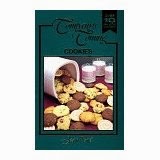
I have memorized the recipe after more than 30 years of doing this, but I think originally I got this from a book. I probably owe the credit to my good old Jean Paré Company's Coming "Cookies" edition. When I was a cookie-obsessed child, that book was second only to the Bible in our house.

This dough recipe makes 40-50 cookies, or if you want you can cut it in half. Remember, though, you may lose some gingerbread men to crumbling, spontaneous amputation and overeating.


Gingerbread Dough


1/2 cup Butter: room temperature for best results
1 cup White Sugar
1 cup Molasses
2/3 cup Water

2 tsp Baking Soda
2 tsp Ginger
1 tsp Cinnamon
1/2 tsp Cloves
1 tsp Salt
6 1/2 cups Flour


 Instructions:

 1. Cream the butter and sugar together.  Have your child add the molasses and water and give it a stir with a big wooden spoon. He or she will enjoy watching the molasses swirl slowly out of the measuring cup. Your dough will soon look like porridge and cola.


2. Mix in all the other ingredients. Make sure you let your little one smell (not snort!) the different spices as you add them. Stir it as best you can with the spoon, but you will soon need to get in there and make it into a ball with your hands.

3. Eat a little dough. Yum.


4. Cover and place in the fridge for at least 20 minutes.


Cookie Cutting Tips

•Look for classic cookie cutters when you purchase. The ones with outlines only. The gimmicky types with inside lines or molds never turn out right, and even when they do, they limit your creativity.

• If your dough has been in the fridge overnight, warm it on the counter for at least 30 minutes.

• For best results, you need surface with an even coating of flour. I prefer to use a wooden cutting board instead of the finished wood of my dining room table because the flour spreads more evenly.

Flour play
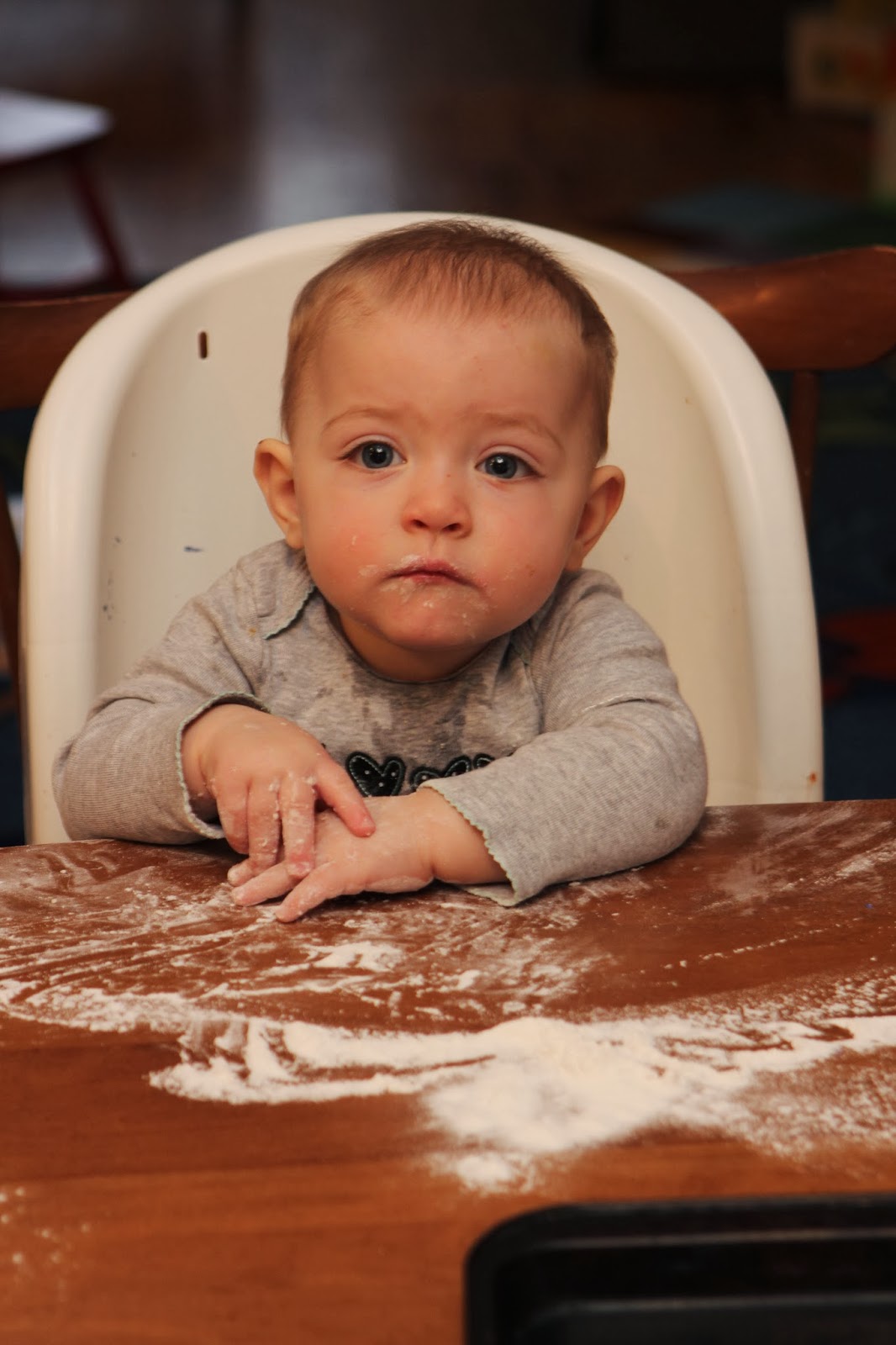
• With little children, you may not need to go any further. You'll have them at flour. Sprinkle a little on the table top for them and let them smear it around.

• Rub flour on a wooden rolling pin, and over the surface of the dough. Begin to flatten it into a large oval, checking occasionally to make sure it's not sticking to the wood. Roll to a uniform thickness of about 6-8 millimeters. Show your child how to put the cookie cutter close to the edge (good luck with that!) and do the "press and wiggle". If all goes well, the dough should stick to the inside of the cutter when you transfer it to the pan. If not, use a flat spatula. The cookies will grow slightly so leave a half inch or more clearance around each cookie. Most kids will do a couple cookies and get bored, then you'll end up doing the rest while they try to play with it like play dough. That's okay.

• The dough doesn't get overworked all that easily. You can ball it up and re-roll it four or five times so don't worry about a few mistakes here and there.

• Bake at 350°F (180°C) for at least 8 minutes, or more if your dough is thick. Cooking for longer will give you a stronger cookie but it might be tougher to eat.

Decorating

There are two good methods of decorating: coloured chocolate or icing. (Please don't message me about the "u" in coloured this time. I'm Canadian and I'm not taking it out!). The coloured chocolate is easier for children to work with, less messy when done, and I find that it tastes better to adults who don't enjoy loads of sugary icing.  The downside is that it takes a fair bit of skill to get it to look good.
Icing is traditional, it looks great and can be really fun to squeeze, but it can also be messy and more work to make.

Coloured Chocolate

Nothing could be simpler. First hit up the Dollar store and get some plastic paintbrushes and small
Blue, "painting" cookies at 18 months.
bowls- I prefer ramekins. Get one for each colour. Then head to the Bulk Barn or a bulk food store of your choice and buy some chocolate melting wafers. Microwave the wafers on medium heat and stir occasionally with a Popsicle stick until just melted. If you do it right, the chocolate will be liquid but not hot enough to burn your child. You can use a pan of hot water or a hot plate to keep the chocolate melted when not in use, but I find it easier just to pop them back in the microwave every 10 to 15 minutes. Use a different paintbrush in each dish and, if multiple people are making cookies, try to pass the children one dish at a time or else they will just slop all the colours together.

Children will apply the chocolate just as they would apply paint to a craft. They can also add sprinkles if they are quick enough to do it before the chocolate hardens.
Some Chocolate ones I made

Icing

Making: I'll admit this is one of those things I never bother to use a recipe for. You can google buttercream icing and find something lovely, I'm sure. But all I do is pour some icing sugar into a bowl, add some butter and some liquid- milk for cookies, or egg white for gingerbread houses or anything that needs to act as edible glue. I sometimes use egg white icing to repair gingerbread limbs. You will also add a flavour and color of your choice, and I also like to put a touch of cream of tartar to keep it from tasting too sweet. Mix until it is pasty and stiff. If it's runny, add more icing sugar, and if it's doughy, add more butter or milk.

Mixing: If you are mixing a number of colours, start with the lightest colour and work towards the darker ones. That way you don't have to wash out your bowl between colours. I like to start with white (I use shortening instead of butter to keep it white), then I make light yellow, very light orange (or caucasion skin tone), dark orange, red, then brown.  You can add cocoa to the remnants of the red icing to make brown. Then rinse the bowl and make green, blue, then purple, then black.

For best results, use Wilton Gel colour, especially for red, purple and black. Use a baby spoon for scooping it out if you have one, or a flat toothpick.

Squeezing: You can use pastry bags if you want to get fancy, but I find it easier just to use small plastic bags.  Turn the bag inside out, apply a spoonful of icing to one corner and then turn right side out. Add an elastic or twist tie, then snip off a tiny hole in one corner.
For young children, just give them enough icing for one cookie at a time or else they may end up with a mountain of icing. Have them squeeze it onto the cookie, add decorations and allow it to air dry.

Spreading: If you want to cover a large area of cookie with a solid color, squeeze the icing all around and the apply a wet butter knife to spread it around. Be careful not to spread too hard or the icing will separate from the cookie. It may help to slightly dampen the cookie before you begin to help it stick, or you can pre-prime the cookies with corn syrup and apply icing while it's still tacky.

Get creative: If your goal is to serve cookies to children, use lots of color and candy. You can try to make recognizable figures like Dora, Cinderella, or Optimus Prime if you're really talented. If you're not so talented, Elmo and Cookie monster are great for novices.  You can even buy candy googly eyes at the Bulk Barn.
Cookie Monster and Elmo, as conceptualized by an 18 month old.

The Icing covered cookies Blue made at age 2 1/2
If you are giving the cookies to grown ups, less is more. Adults always tend to go for the cookies with the least amount of toppings, so your classic gingerbread man is your best bet. I like to do a simple white outline and a couple candy buttons, then I add a touch of individualism with Groucho Marx glasses or a beard.
The rabbit and wreath are adapted from an armless, decapitated gingerbread man.


Displaying: In my own family tradition, we made the cookies into a long chain and hung
them on either side of the inside threshold of our home. Visitors to the house would each get to cut off the bottom cookie and take it home. Spread out a long line of plastic wrap on the floor- at least 8 feet. Place the dried cookies face down in the centre of the wrap and carefully fold in the sides. Do this when your children and pets are safely occupied elsewhere or else you're in for a world of trouble.  Once folded, tie Christmas ribbons in between each cookie. If you want each cookie to stay sealed, tie two ribbons in between each one and cut between them.

Follow up: Sit down with your child and eat your gingerbread men while drinking a nice glass of milk, all while reading your favourite version of the "Gingerbread Man" story.

Merry Christmas!